Feeding Therapy
Helping children build the skills, comfort, and confidence they need to eat and drink safely and successfully through individualized, child-centered therapy.

What isFeeding Therapy?
Pediatric feeding therapy helps children develop the skills they need to eat and drink safely, comfortably, and successfully. Therapy may address chewing, swallowing, oral-motor skills, drinking, food exploration, accepting new foods and textures, and building a more positive relationship with mealtimes.
Understanding Feeding Therapy
Feeding therapy provides individualized support for children who have difficulty eating or drinking. An SLP specializing in feeding therapy may work on oral-motor skills, chewing, swallowing, food exploration, drinking, and expanding food variety while helping children feel more comfortable and confident during meals.
Who is it for?
Feeding therapy can support children of all ages. It may benefit children with limited food variety, food refusal, difficulty with textures, chewing or swallowing challenges, drinking difficulties, stressful mealtimes, or feeding concerns related to developmental, neurological, sensory, or medical conditions.
What does it help with?
Feeding therapy can support a wide range of feeding skills, including chewing, managing food in the mouth, transitioning to new textures, drinking from bottles and cups, swallowing safely, exploring new foods, and developing more age-appropriate eating and drinking skills.
What We Offer
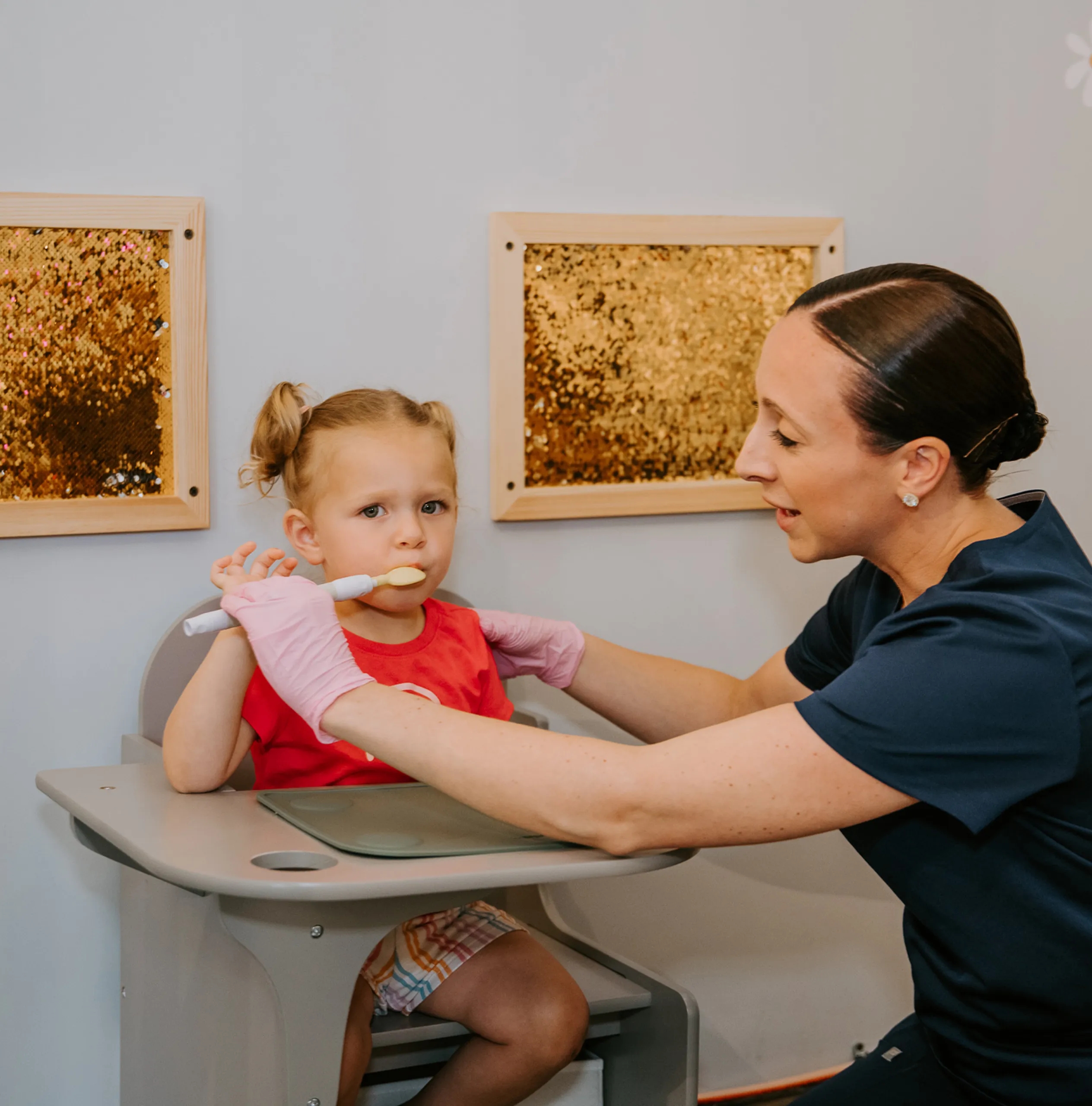
Feeding challenges can have many different causes, which is why therapy starts with understanding the whole child. We provide individualized, supportive care that addresses feeding skills, food exploration, oral-motor development, and mealtime challenges while giving families practical strategies they can use in everyday routines.
We begin by understanding your child’s feeding history, current skills, challenges, and goals to identify areas that may benefit from support.
Therapy may address biting, chewing, tongue movement, oral-motor coordination, and managing food safely and efficiently in the mouth.
We help children gradually become more comfortable exploring and accepting new foods, flavors, and food groups while working toward a greater variety.
We support children who have difficulty transitioning to new textures or progressing from purees to more age-appropriate foods.
Therapy addresses difficulties with swallowing and helps identify when additional evaluation or support may be needed.
We support development of age-appropriate drinking skills, including bottle, straw, cup, and open-cup drinking.
Therapy focuses on creating more positive, manageable mealtimes while addressing behaviors, avoidance, anxiety, and other challenges surrounding eating.
Families receive practical strategies, education, and tools they can use during everyday meals and routines.
Each therapy plan is tailored to your child’s age, needs, feeding skills, and goals in a supportive, child-centered environment.
Recognizing Your Child’s Challenges
Everyday signs that mealtimes, eating, or drinking may be more difficult than they should be.
A Very Limited Diet
You may notice your child eats only a small number of foods, refuses entire food groups, or becomes upset when presented with something unfamiliar. A limited diet can make it difficult to meet the variety expected for your child’s age and development.

Difficulty Managing Food
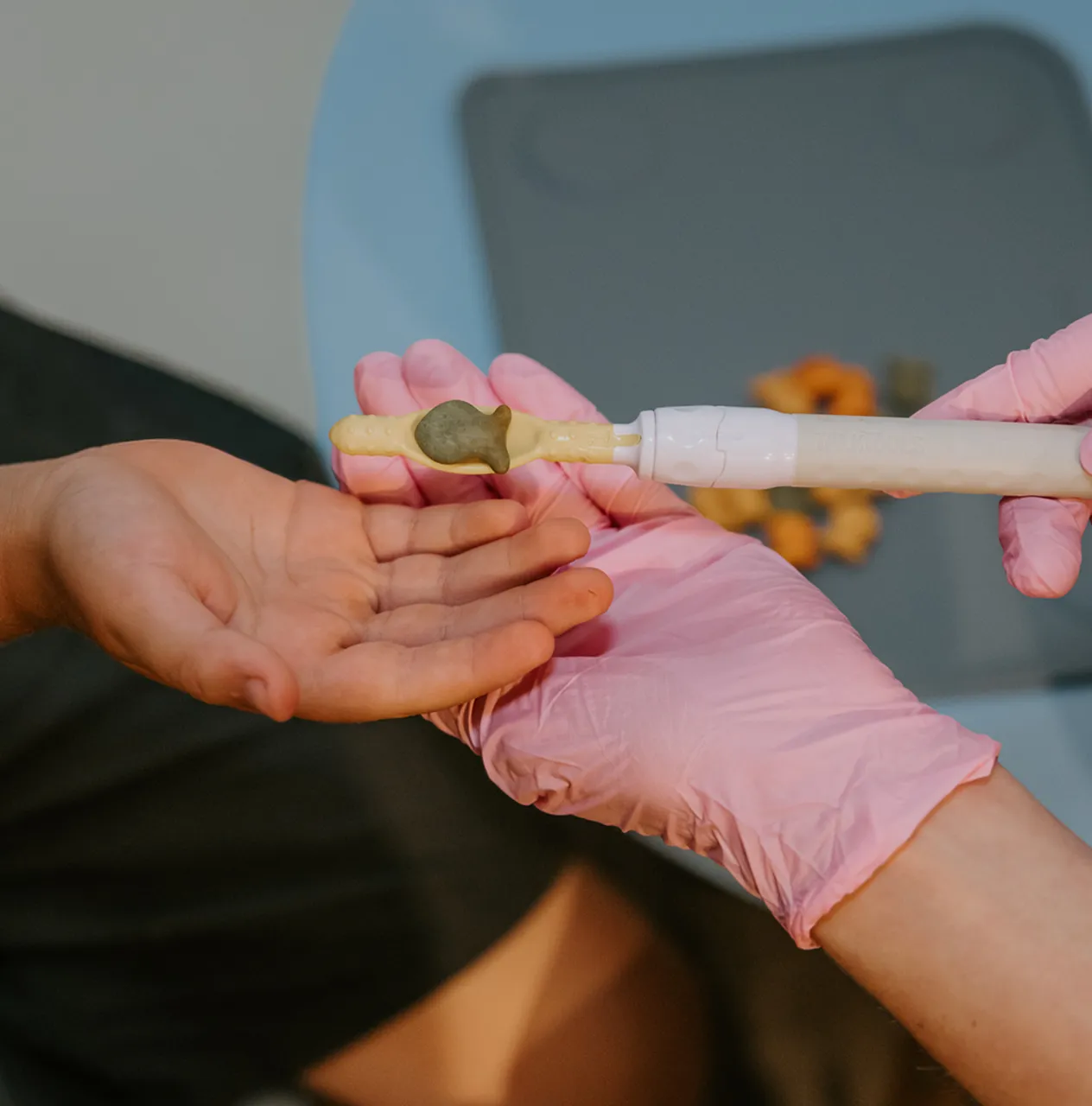
Your child may have trouble biting or chewing, moving food around their mouth, or swallowing. Frequent gagging, coughing, choking, or difficulty managing food may also indicate that additional feeding support is needed.
Stressful or Lengthy Meals
Mealtimes may consistently feel stressful, take much longer than expected, or become a source of frustration for your child and family. Feeding therapy can help make meals more positive and manageable.

Help Your Child Feel
Discover how individualized Feeding Therapy can support your child’s eating and drinking skills, build confidence, and create more positive mealtime experiences.

Discover How To Help
Your Child Thrive
Personalized care and guidance are just a click away.